

For this research point, I was tasked with considering the different ways in which artists have expressed themselves through the landscape genre. There have been so many different interpretations of similar types of landscape with very extreme differences in their representation.
Surrealist Landscapes
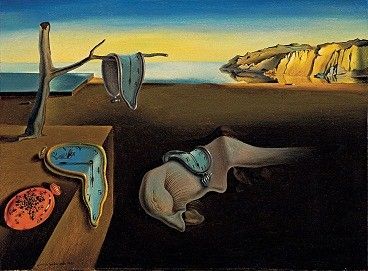
Fig. 1. Dali, S. ‘The Persistence of Memory’ (1931) 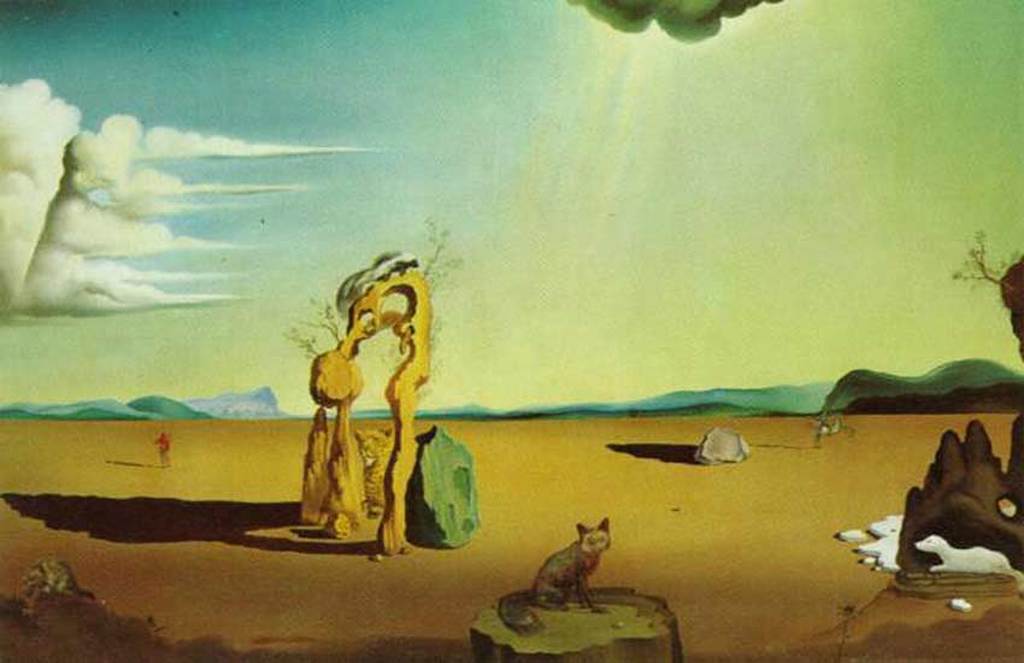
Fig. 2. Dali, S. ‘The Persistence of Memory’ (1946) 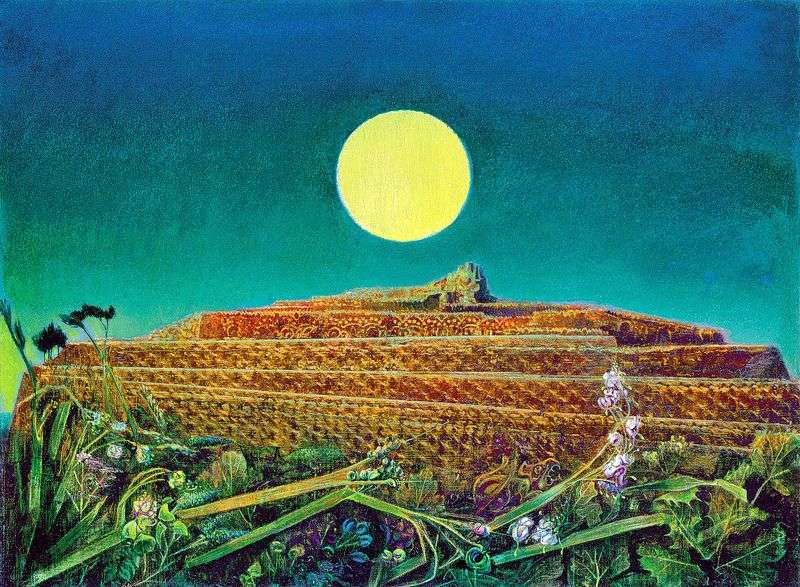
Fig. 3. Ernst, M. The Entire City (1935 – 1936) 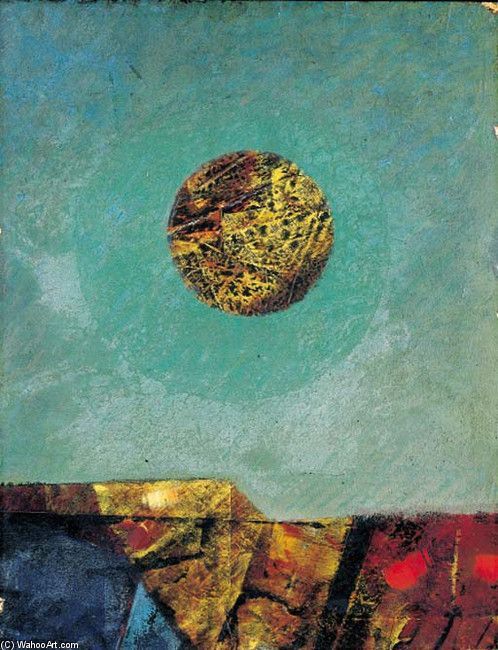
Fig. 4. Ernst, M. Paysage avec Lune (1964) 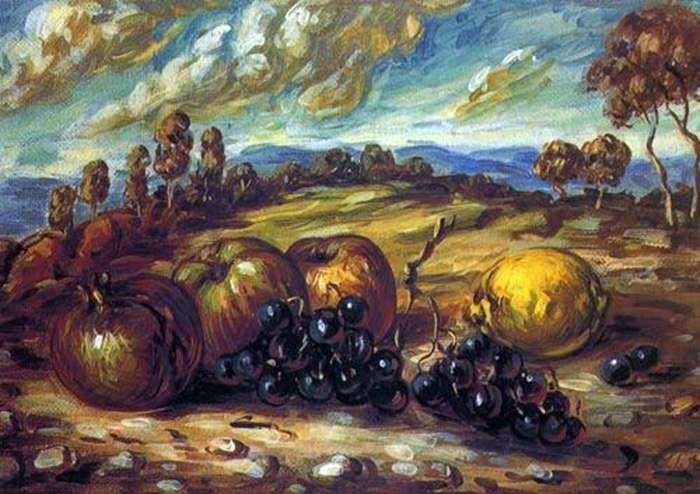
Fig.5. de Chirico, G. ‘Fruit in the Landscape’ (Unknown) 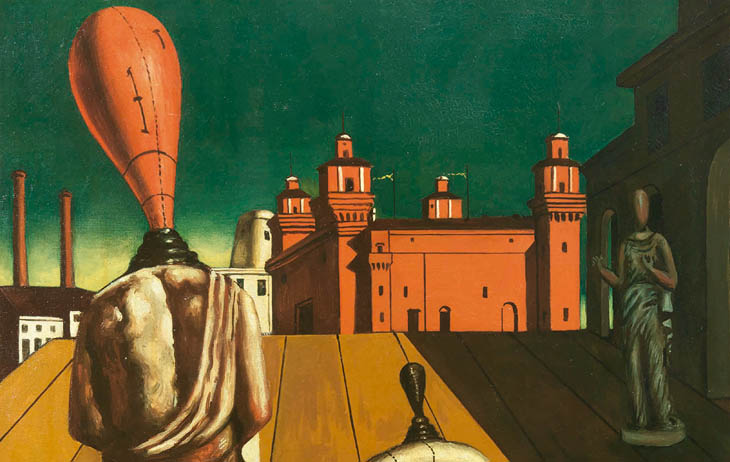
Fig. 6. de Chirico, G. ‘The Disquieting Muses’ (c. 1916-1918)
As described in my course textbook, I was to consider some of the surreal landscapes created by Dali, Ernst and de Chirico.
I was already familiar with the works of Dali, but it was nice to revisit the melting clocks and faces in the searing desert heats. Whenever I look at these works, I consider that the desert is actually the space within Dali’s imagination where all the random, surreal objects gather and are organised by the painter and are an insight into the inner workings of his mind.
Having researched the further two artists suggested in my course textbook, Max Ernst and Georgio de Chirico, I can see a similarity between the three artists’ works, but also their own signatures within them. Whilst Ernst’s works appear to incorporate an almost textural aspect to create the features within them and thus creating a very surreal finish, de Chirico appears to focus his imagination in a more bizarre collection of objects within the pieces to create the finished aspect. The over-sized fruit in Fig. 5. looks perfectly placed within its setting, as do the bizarrely headed statues within Fig. 6.
I find all these works completely fascinating and it is commendable to the artists that they have taken what is generally seen as a rather ‘dull’ genre and added interest with their ideas and creativity. These works are as unique to each artist as their own thought processes are as there is no way of plagiarizing someone’s thought processes and the ways in which they are capable of going off on very peculiar tangents.
Emotional and Subjective Aspects in Landscapes
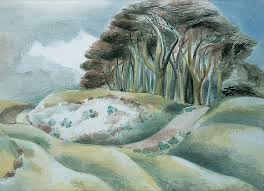
Fig. 7. Nash, P Wittenham (1935) 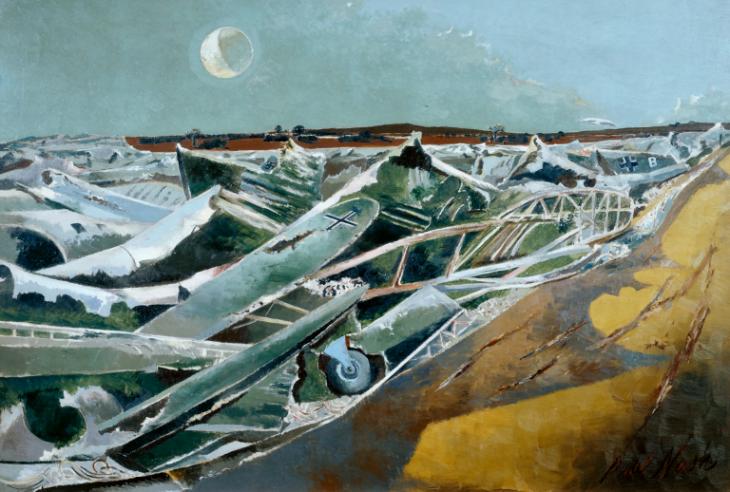
Fig. 8. Nash, P. Totes Meer (Dead Sea) (1940-1) 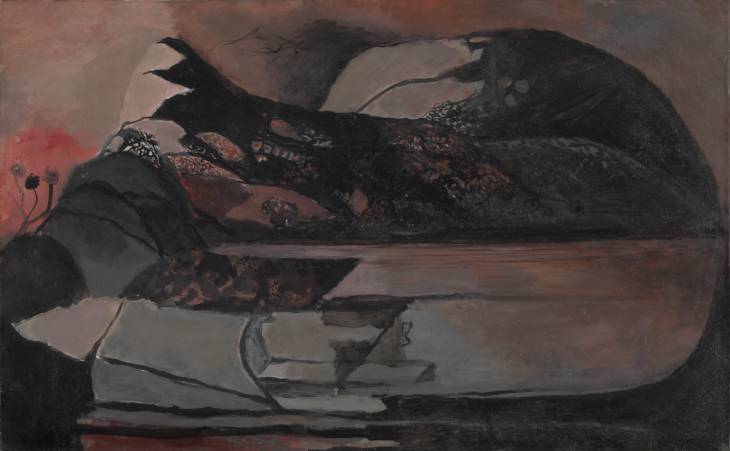
Fig. 9. Sutherland, G. Black Landscape (1939-40) 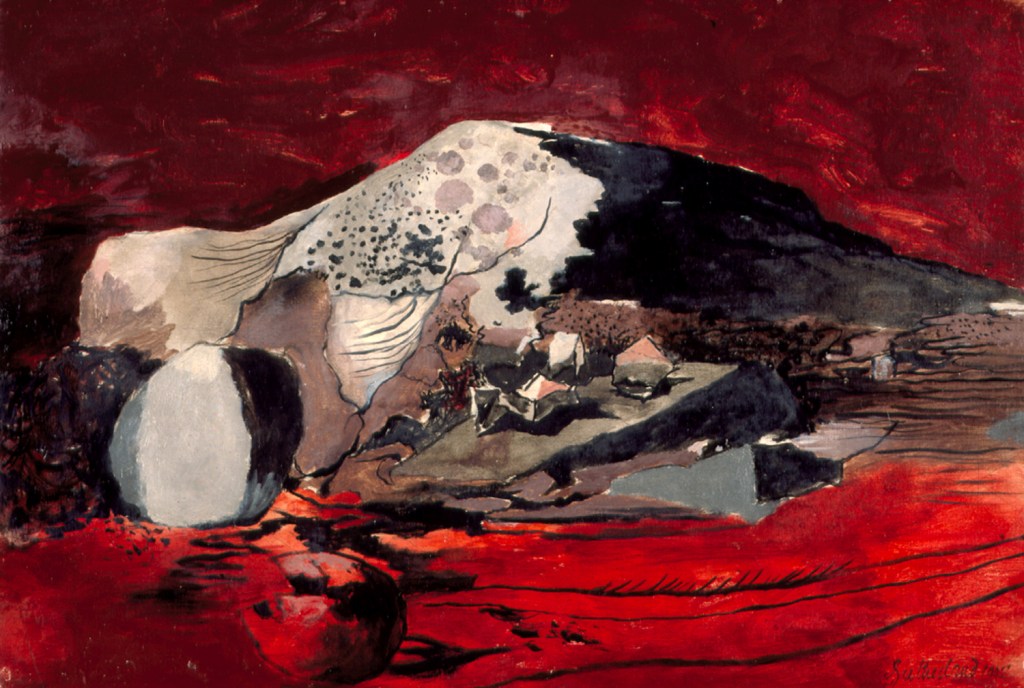
Fig. 10. Sutherland, G. Red Landscape (1942)
Next I was to look at the emotional and subjective ways in which artists approach the landscape genre. To think of initially, I felt this would be a rather dull area to research as I simply imagined van Gogh’s dark and moody swirls being recreated by numerous artists, so I was then rather surprised to see that artists have actually been rather creative in their expression of their emotions within their pieces.
Nash’s work, with its cool colours have an almost soothing and calming effect on me, however, if I look closer, I am drawn to the calmer, smoother lines in Fig. 7. which appear to just flow gently across the piece, whereas Fig. 8. is rather choppy and too harsh to be drawn into comfortably. This piece makes me feel as though I am calm on the surface but with an inner turmoil not easily initially seen by the viewer.
On the other hand, Sutherland’s work shows much more heat and passion within it. There is also a likeness to the female human form within them, lying on their sides as though sinking into the earth around them and watching over the little villages they wrap themselves around. The bold reds and blacks in Fig. 10. are so inviting and draw the viewer into the centre of the piece. I really like these pieces and I can see that they would work well for me in terms of research if I were to try and incorporate landscape and the human form as opposed to an actual human form within the piece as a separate entity. I actually find this concept rather exciting to experiment further with.
German Expressionists
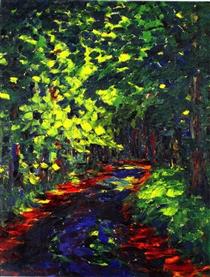
Fig. 11. Nolde, E. Лесная дорога (1909) 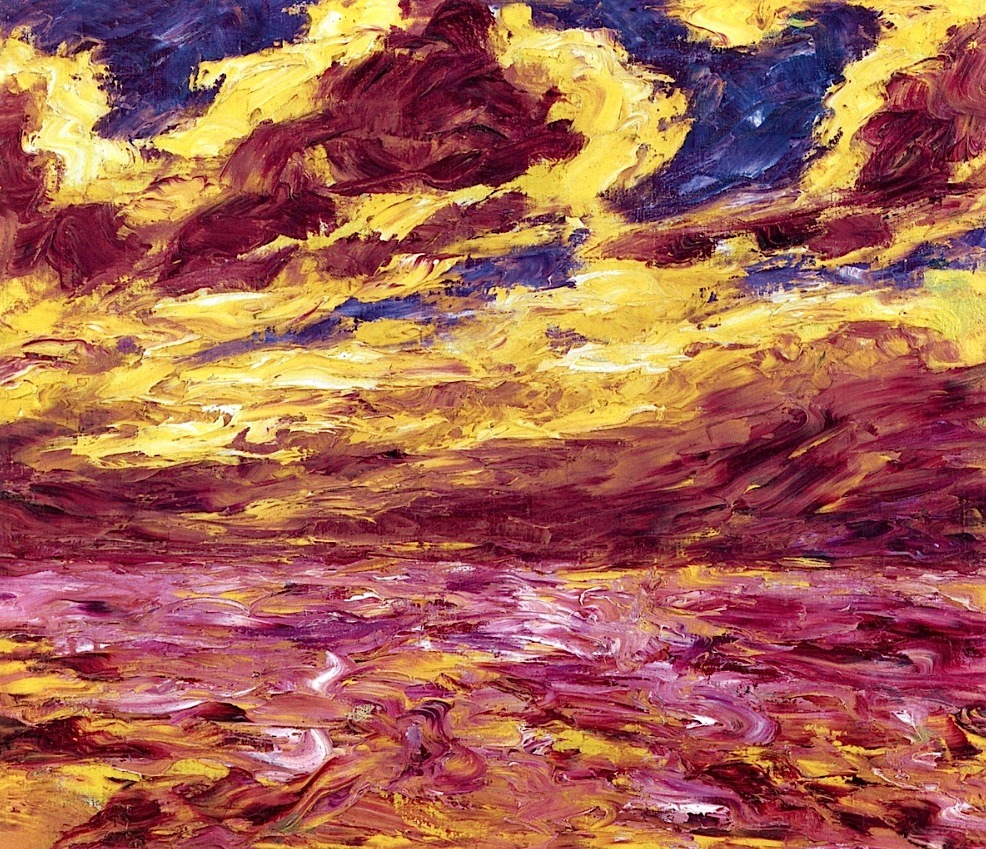
Fig. 12. Nolde, E. Autumn Sea VII (1910) 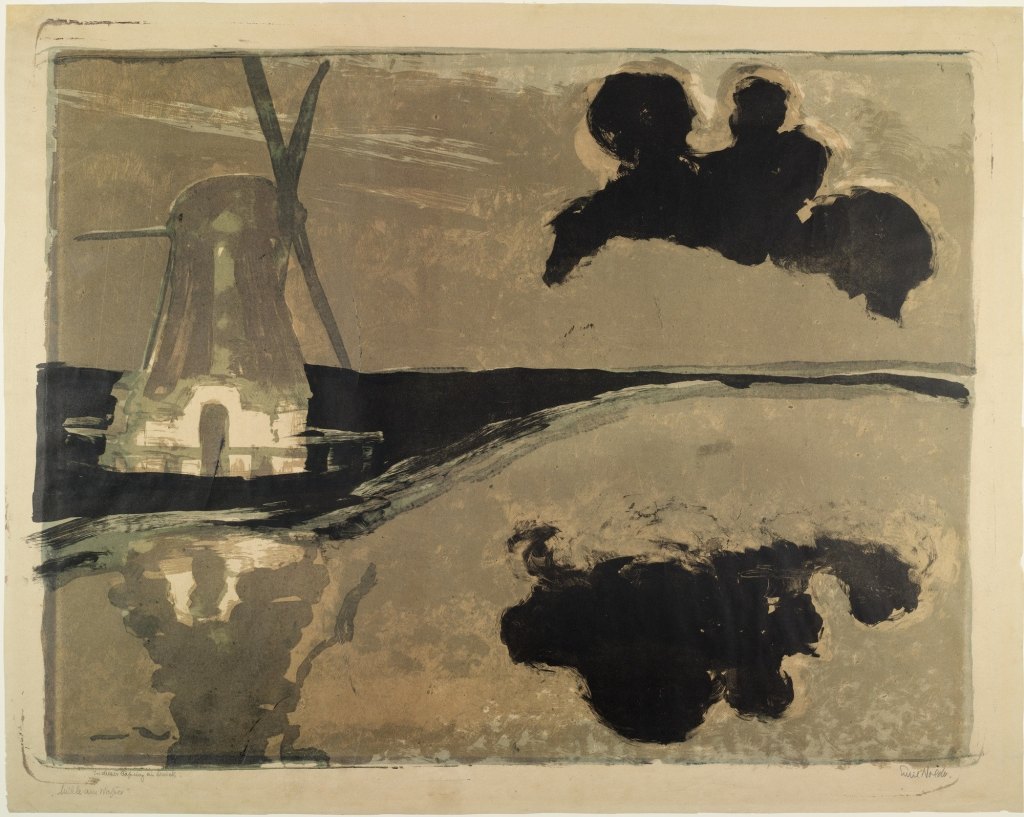
Fig. 13. Nolde, E. Mill by the Water (Mühle am Wasser) (1926) 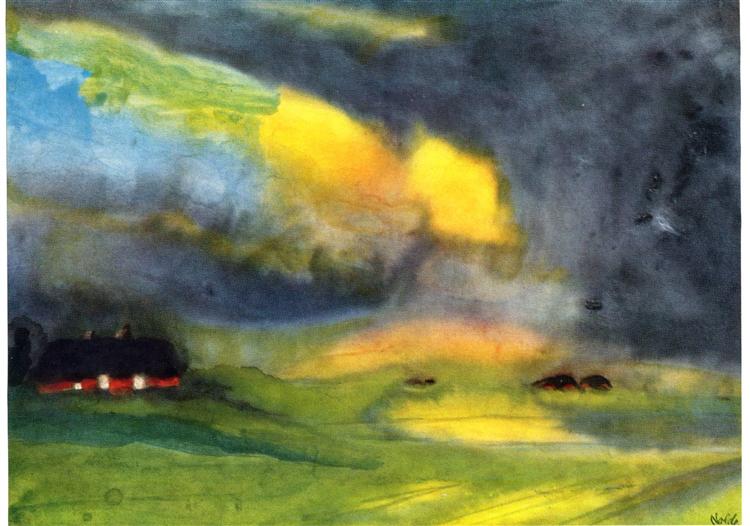
Fig. 14. Nolde, E. Colored Sky Above the Marais (c.1940) 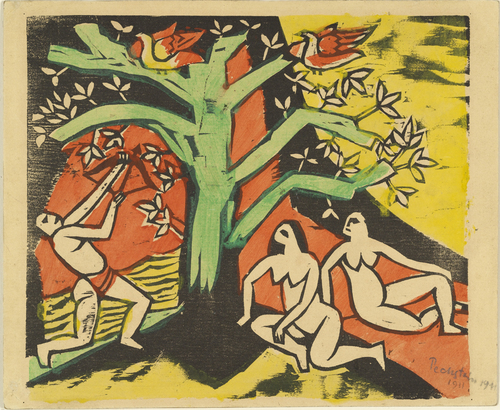
Fig. 15. Pechstein, M. Killing of the Banquet Roast (1911) 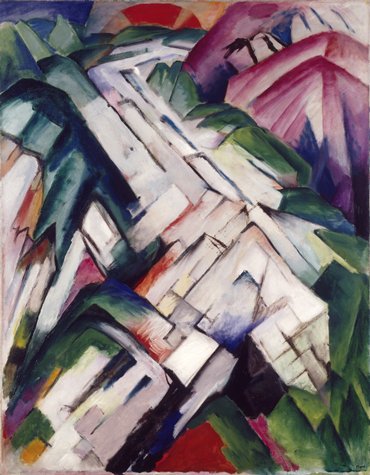
Fig. 16. Marc, F. Gebirge (Mountains) (1911) 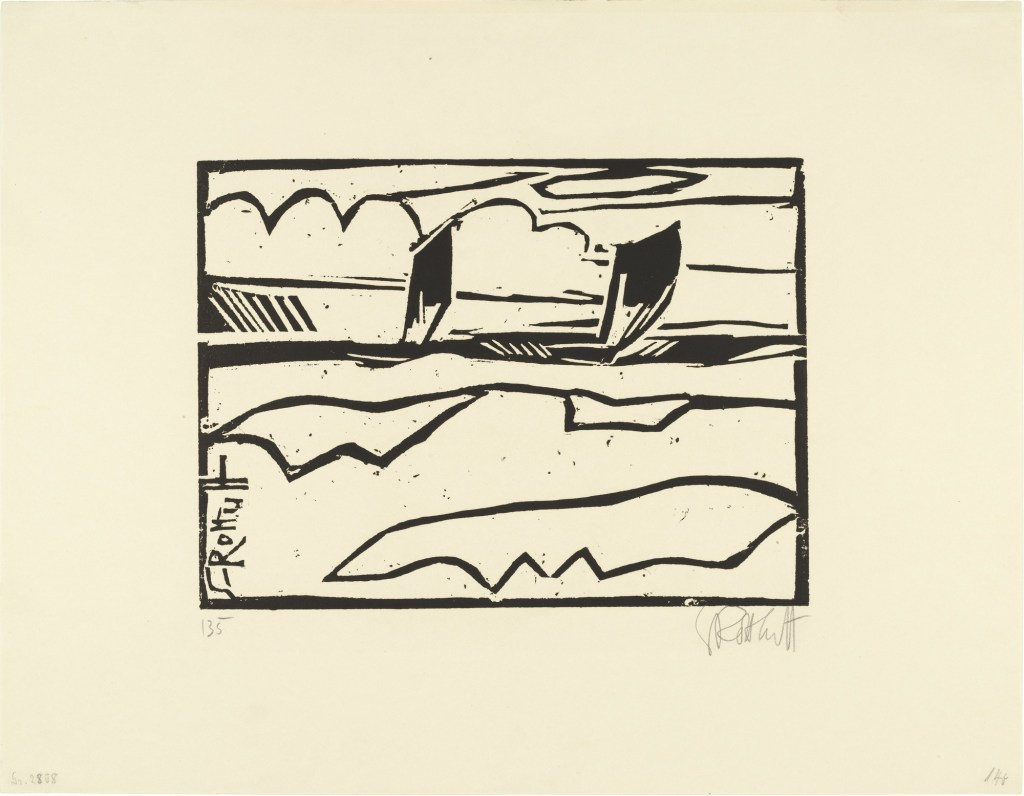
Fig. 17. Schmidt-Rottluff, K. Boats on the Sea (1913)
Next, I was to look at the works of several German Expressionist artists. The first, Emil Nolde, was suggested to me within my course textbook. I was instantly drawn in by these works and their vibrant, contrasting colours. The Expressionist style is rather apparent in the earlier works, with their short brushstrokes and focus on the light within the piece. As time goes by, Nolde’s work seems to become more relaxed and the brushstrokes more blended and lengthy, as well as a duller use of colours – even simply just black and white in Fig. 13.
I then looked into three further artists and tried to find very different approaches used by them. Whilst the work of Pechstein at Fig. 15. does not really appeal to me aesthetically, I can appreciate the gentle colours used and the slightly childish but still clever in the way the objects have been depicted. The same can be said of Schmidt-Rottluff’s work at Fig. 17., with it’s basic, juvenile depiction of the scene. However, I am actually rather drawn to this by comparison. Perhaps it is the lack of colour? Or the lack of colours which do not generally appeal to me aesthetically? The piece created by Marc at Fig. 16., however, is utterly beautiful in my eyes. I really like the colours used and the sharp angles created. There is a sense of chaos within the shapes created in the piece, but also a tranquility in the colour scheme used. Perhaps to others who are not aesthetically drawn to these colours, the image is actually rather tense and agitating?
Symbolist Movement
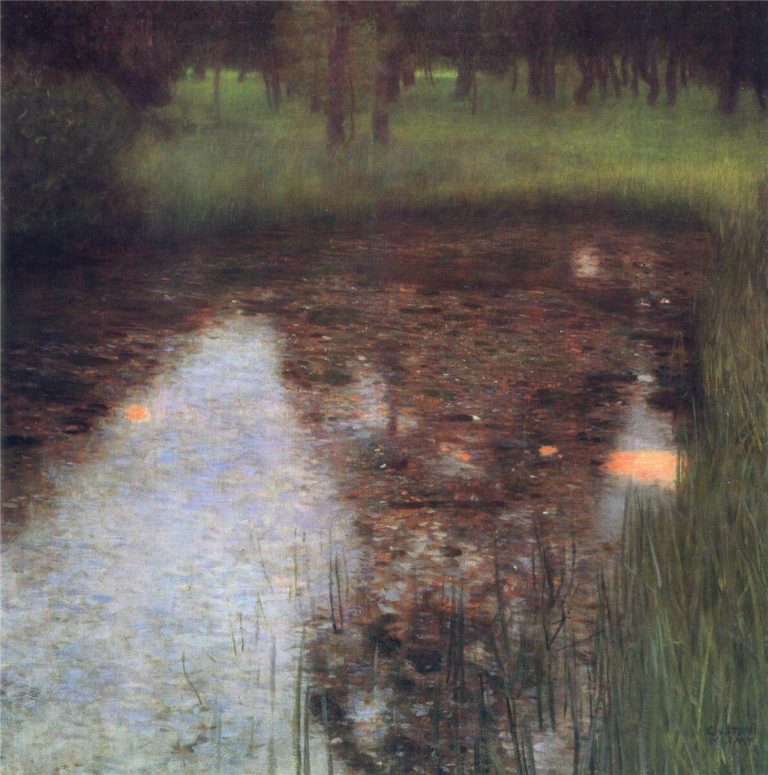
Fig. 18. Klimt, G. Calm Pond on the Kammer Castle Grounds (1899) 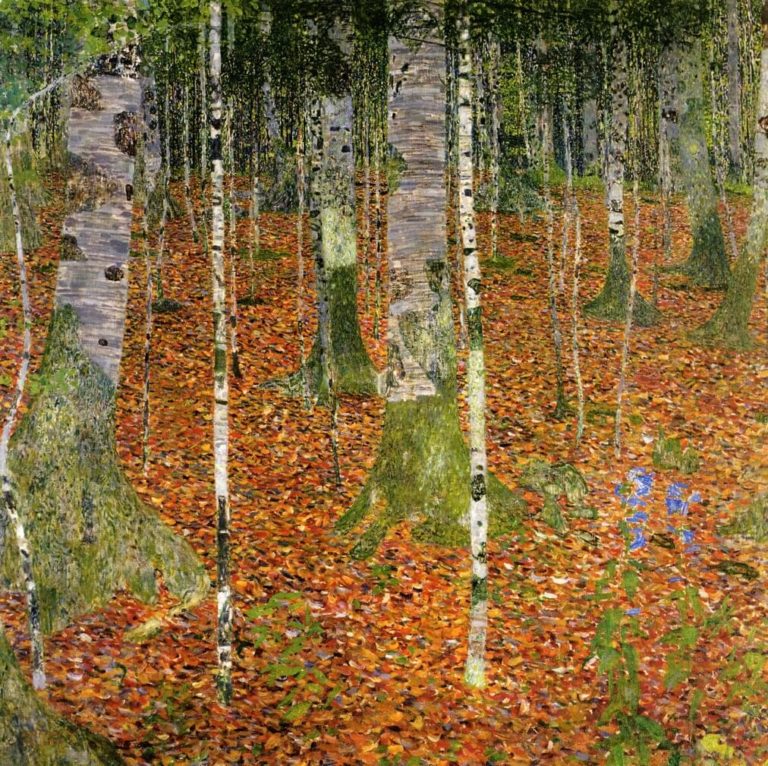
Fig. 19. Klimt, G. Birch Forest (1903) 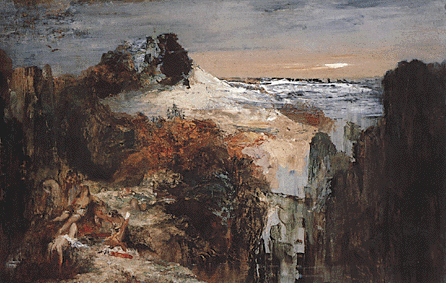
Fig. 20. Moreau, G. Tomyris and Cyrus (1873-80) 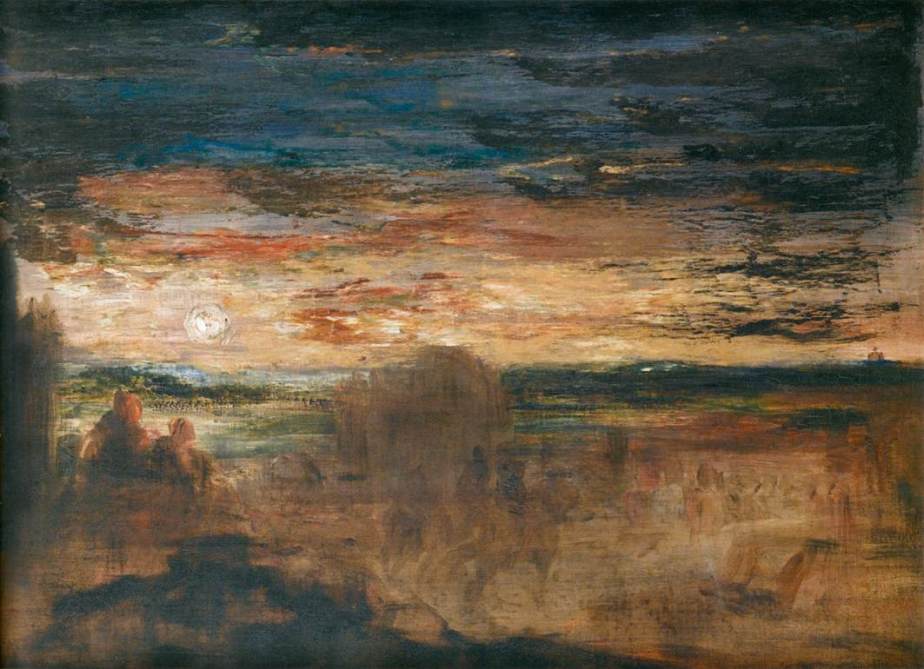
Fig. 21. Moreau, G. Shepherds Viewing Passing Soldiers (1873-80) 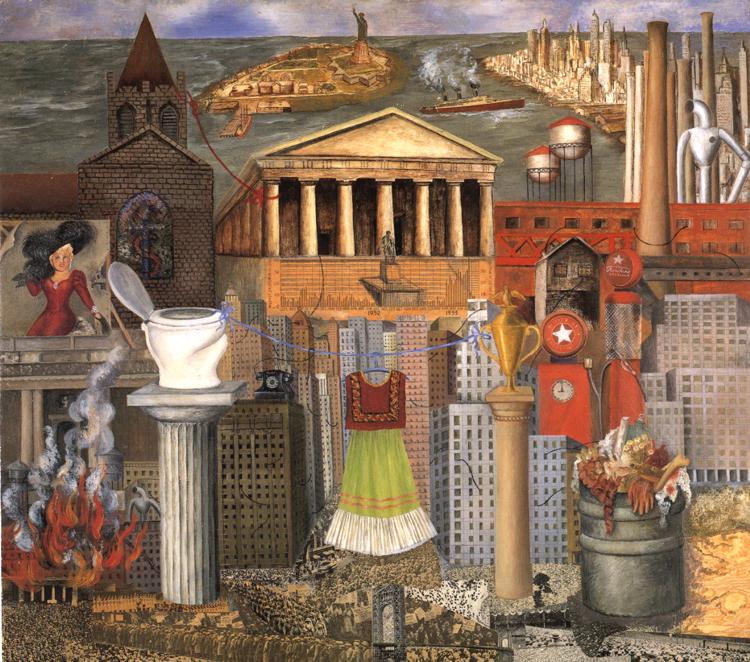
Fig. 22. Khalo, F. My Dress Hangs There (1873-80) 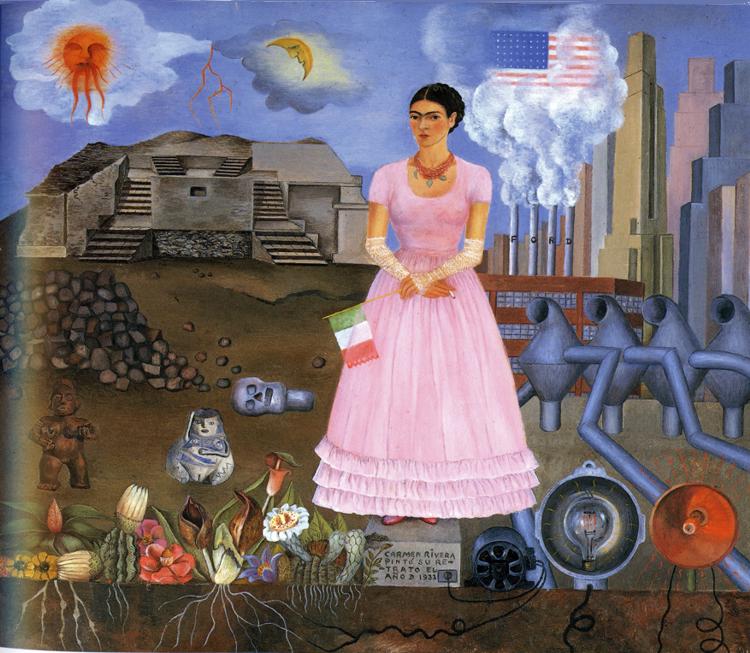
Fig. 23. Khalo, F. Self Portrait on the Border Line Between Mexico and the United States’ (1932) 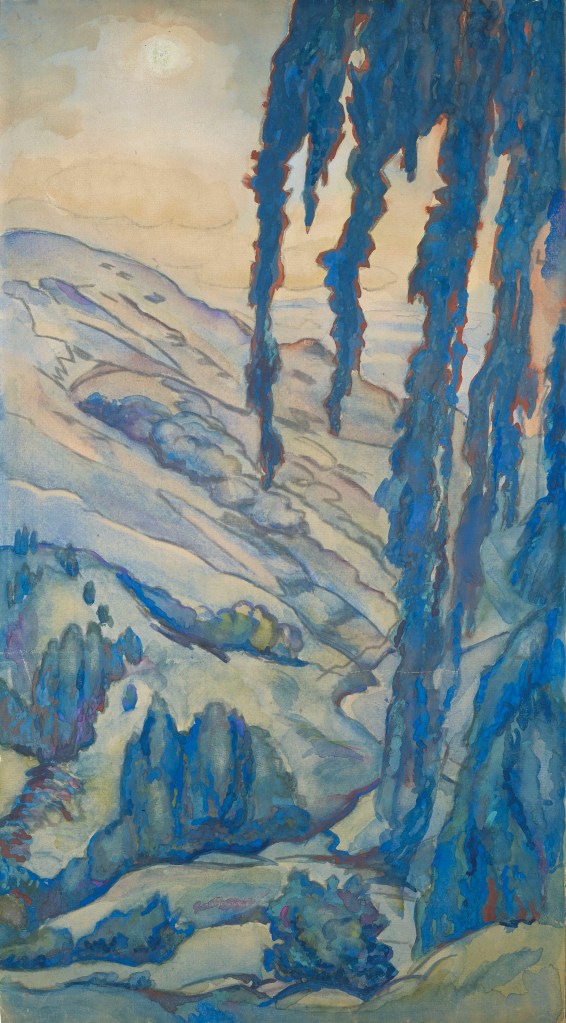
Fig. 24. Bakst, L. Landscape (Unknown) 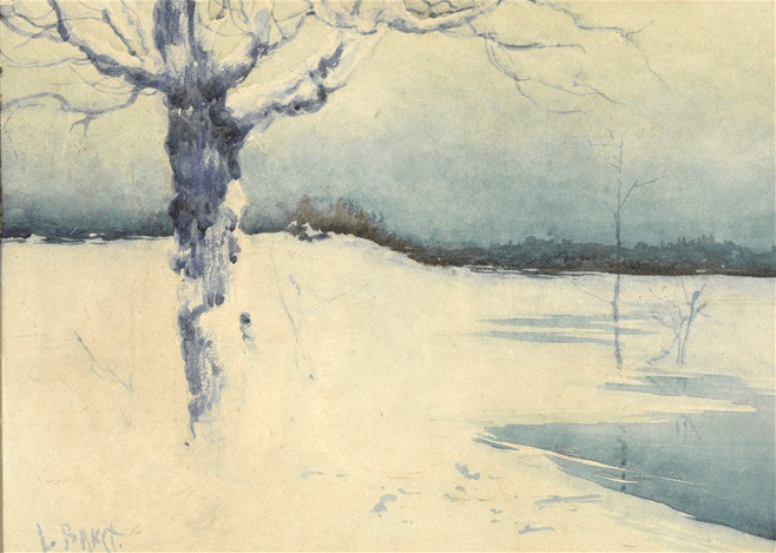
Fig. 25. Bakst, L. Winter Landscape (Unknown) 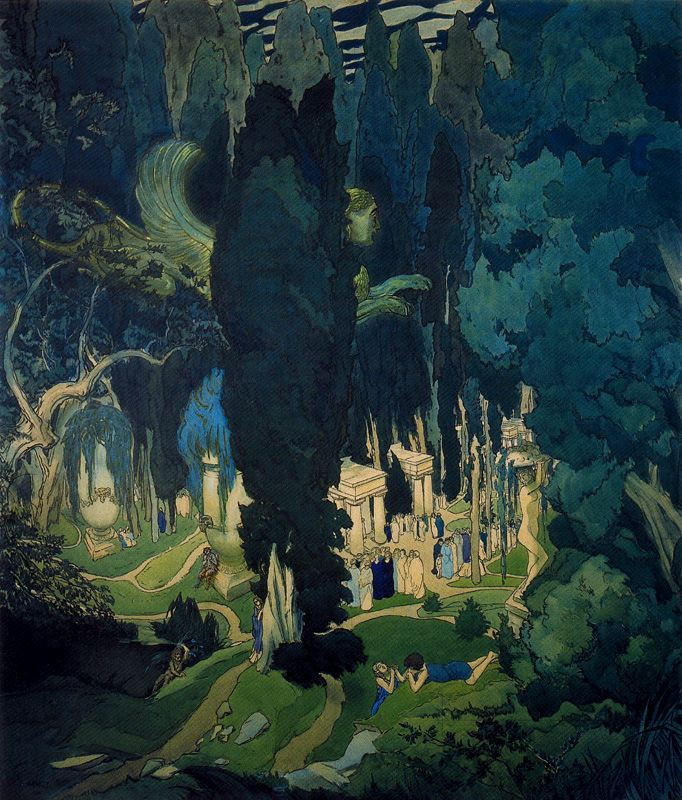
Fig.. 26 Bakst, L. Elysium (1906)
Finally, I was to consider some of the works created by several Symbolists. Symbolism is definitely something which appeals to me and trying to understand the reasonings for their inclusion within pieces is fascinating.
Looking at the works created by Klimt, I am instantly drawn to the glass-like finish to the piece at Fig. 18. and the contrast with the ‘collage’ effect of Fig. 19. which seems to literally recede into the distance infinitely.
Moreau’s work is in complete contrast. There are more realistic elements to the pieces, but also an air of atmosphere. These pieces really do call to me and are created with techniques and colour I really admire and would like to replicate myself within my own work.
By contrast, Khalo’s works have never really appealed to me. I believe this is due to the bold colours used or worlds in which I just cannot envisage myself. This does not mean, however, that I cannot appreciate the skill used to create these works. There is a real sense of collage to the pieces, as though they have been pieced together randomly. I think this, similarly to Dali, are simply an insight into the artist’s mind and the rapid thought processes during the creation process.
Finally, when looking at Bakst’s works, I am really drawn to the use of a blue pallette across the three pieces. There is a slight resemblance to ancient Japanese art and I really like the way the artist has used draping features (leaves etc) in the foreground to really separate the grounds.
Reflection
Overall, whilst I do not think landscape to be my favourite genre, I feel I have learned a lot within this research as to the methods I could use within my own work going forward, such as using the human form to create the contours of the land and the colours used to express emotions within them, not to mention using simplicity to really reel things back and create a statement within a muted piece.
List of Illustrations
Fig. 1. Dali, S. (1931) ‘The Persistence of Memory’ [Oil on canvas] At: https://www.theartstory.org/artist/dali-salvador/artworks/#pnt_3 (Accessed on 11 September 2020)
Fig.2. Dali, S. (1946) ‘Nude in the Desert’ [Oil painting] At: https://www.wikiart.org/en/salvador-dali/nude-in-the-desert-landscape (Accessed on 22 September 2020)
Fig. 3. Ernst, M. (1935 – 1936) ‘The Entire City’ [Oil on canvas] At: https://www.pinterest.de/pin/348536458645459179/ (Accessed on 10 September 2020)
Fig. 4. Ernst, M. (1964) ‘Paysage avec Lune’ [Oil on panel] At: https://kiamaartgallery.wordpress.com/2018/07/17/max-ernst-cannes/#jp-carousel-3783 (Accessed on 10 September 2020)
Fig. 5. de Chirico, G. (Unknown) ‘Fruit in the Landscape’ [Unknown] At: https://painting-planet.com/fruit-in-the-landscape-by-giorgio-de-chirico/ (Accessed on 17 September 2020)
Fig. 6. de Chirico, G. (c.1916-1918) ‘The Disquieting Monks’ [Oil on canvas] At: https://en.wikipedia.org/wiki/The_Disquieting_Muses (Accessed on 17 September 2020)
Fig. 7. Nash, P (1935) ‘Wittenham’ [Unknown] At: https://blog.tooveys.com/page/45/ (Accessed on 10 September 2020)
Fig. 8. Nash, P (1940-1) ‘Totes Meer (Dead Sea)’ [Oil paint on canvas] At: https://www.tate.org.uk/art/artists/paul-nash-1690 (Accessed on 10 September 2020)
Fig. 9. Sutherland, G (1939-1940) ‘Black Landscape’ [Oil paint and sand on canvas] At: https://www.tate.org.uk/art/artworks/sutherland-black-landscape-t03085 (Accessed on 10 September 2020)
Fig. 10. Sutherland, G (1942) ‘Red Landscape’ [Oil on canvas] At: https://artuk.org/discover/artworks/red-landscape-18099 (Accessed on 10 September 2020)
Fig. 11. Nolde, E. (1909) ‘Лесная дорога’ [Oil on canvas] At: https://www.wikiart.org/en/emil-nolde/lesnaya-doroga-1909/ (Accessed on 22 September 2020)
Fig. 12. Nolde, E. (1910) ‘Autumn Sea VII’ [Unknown] At: https://alongtimealone.tumblr.com/image/63657192339 (Accessed on 22 September 2020)
Fig. 13. Nolde, E. (1926) ‘Mill by the Water (Mühle am Wasser)’ [Lithograph] At: https://www.moma.org/s/ge/collection_ge/object/object_objid-61197.html (Accessed on September 2020)
Fig. 14. Nolde, E. (c.1940) ‘Colored Sky Above the Marais’ [Watercolour on paper] At: https://www.wikiart.org/en/emil-nolde/colored-sky-above-the-marais/ (Accessed on 22 September 2020)
Fig. 15. Pechstein, M. (1911) ‘Killing of the Banquet Roast’ [Woodcut with watercolour additions] At: https://www.moma.org/s/ge/collection_ge/object/object_objid-69428.html (Accessed on 23 September 2020)
Fig. 16. Marc, F. (1911) ‘Gebirge (Mountains)’ [Painting] At: https://www.franzmarc.org/Mountains.jsp (Accessed on 23 September 2020)
Fig. 17. Schmidt-Rottluff, K. (1913) ‘Boats on the Sea’ [Wood] At: https://www.moma.org/s/ge/collection_ge/object/object_objid-71215.html (Accessed on 23 September 2020)
Fig. 18. Klimt, G (1899) ‘Calm Pond on the Kammer Castle Grounds’ [Unknown] At: https://www.dailyartmagazine.com/klimts-landscapes/ (Accessed on 10 September 2020)
Fig. 19. Klimt, G (1903) ‘Birch Forest’ [Unknown] At: https://www.dailyartmagazine.com/klimts-landscapes/ (Accessed on 10 September 2020)
Fig. 20. Moreau, G (1873-1880) ‘Tomyris and Cyrus‘ [Oil on canvas] At: https://www.thecityreview.com/moreau.html (Accessed on 10 September 2020)
Fig. 21. Moreau, G. (Unknown) ‘Shepherds Viewing Passing Soldiers’ [Oil on canvas] At: https://www.wga.hu/html_m/m/moreau_g/index.html (Accessed on 10 September 2020)
Fig. 22. Khalo, F. (1933) ‘My Dress Hangs There’ [Unknown] At: https://growthskills.co/frida-kahlo-and-50-pieces-of-her-best-works-of-art/ (Accessed on 10 September 2020)
Fig. 23. Khalo, F. (1932) ‘Self Portrait on the Border Line Between Mexico and the United States’ [Unknown] At: https://growthskills.co/frida-kahlo-and-50-pieces-of-her-best-works-of-art/ (Accessed on 10 September 2020)
Fig. 24. Bakst, L. (Unknown) ‘Landscape’ [Pencil and watercolour on paper] At: https://www.christies.com/lotfinder/Lot/leon-bakst-1866-1924-landscape-6174478-details.aspx (Accessed on 23 September 2020)
Fig. 25. Bakst, L. (Unknown) ‘Winter Landscape’ [Pencil and watercolour on cardboard] At: http://www.artnet.com/artists/leon-bakst/winter-landscape-91s6KSQ2TY0kgCyNgEeL0A2 (Accessed on 23 September 2020)
Fig. 26. Bakst, L. (1906) ‘Elysium’ [Painting] At: http://davidsartoftheday.blogspot.com/2015/02/leon-bakst-elysium.html (Accessed on 23 September 2020)
 Rachael's OCA Blog: Painting One: The Practice of Painting
One thought on “Research Point 4.3.0: Expressive Landscapes: Surreal / Emotional / German Expressionists / Symbolists”