

17th Century Dutch Artists
The 17th century brought with it the appreciation of still life as its own genre. Dutch middle-class citizens required of artists to instil hidden symbols within their pieces and enjoyed the realism of earlier works. The Dutch had a passion tulips and other flowers due to their beautiful nature and religious connotations.
Artists were also rarely commissioned around this time, so they would choose there own subject matter and compositions. Food was also another favourite subject matter amongst artists with the use of breakfast tables rising in popularity.
Another method which derived during this time was the inclusion of other objects alongside food and flowers to include hidden messages to remind the viewer of the futility of enjoying the luxuries and gluttony that comes with mortality. Alongside the sumptuous (and sometimes slightly decaying) bounties of food and flowers, there were now objects such as a pocket watch, hourglass or candle to remind the viewer of the passage of time, as well as the inclusion of skulls to represent mortality.
Another favourite subject matter around this time was artists’ tools in their studios.

Fig.1. Dutch School. A Vanitas Still Life with a Skull, a Violin, a Music Book, Various other Books and Instruments on a Draped Table, before a Red Curtain (c.17th Century) 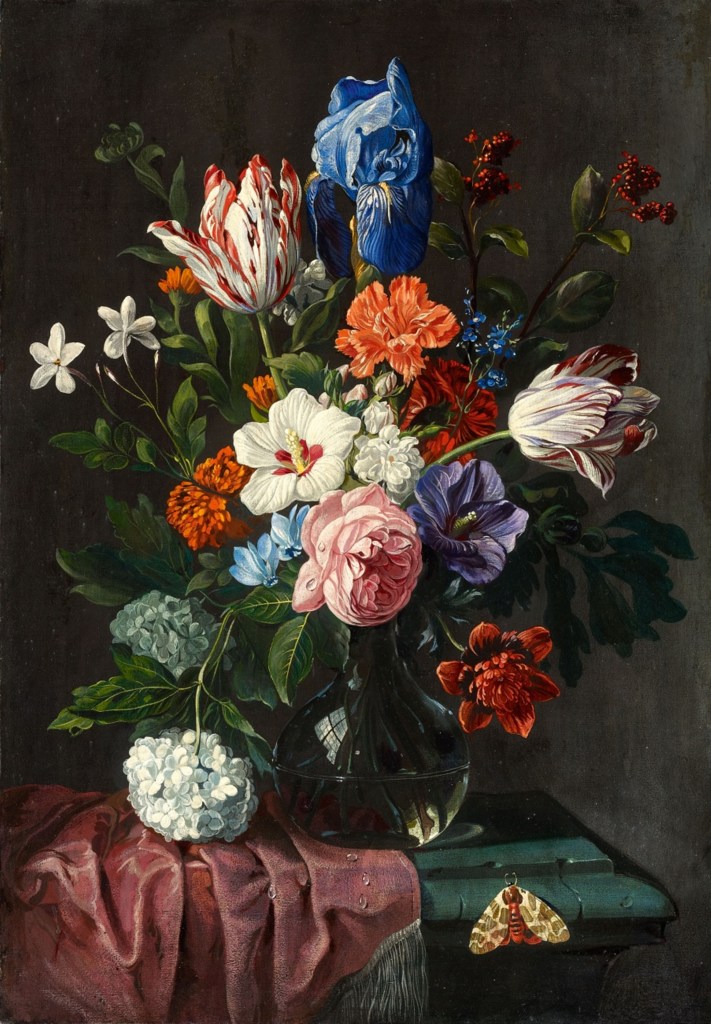
Fig.2. Dutch School Floral Still Life with Tulips. Iris, Roses, Hydrangeas and a Butterfly (c. 17th Century)
Techniques Used
In the 17th century, artists followed a rather strict set of instructions in creating their pieces, all of which share a similar sort of ‘fingerprint’; including dark backgrounds, hidden symbols and layering of colours.
Firstly, the artists would choose their support. Pre-prepared canvases were widely available during this time, however, should an artist choose to prepare their own surface, they would do so by using any leftover pigments from previous works and from brush cleaning processes. This process was called ‘pincleliere’. The pigments would blend together to create muddy, earthy tones which were perfect for the base colours of a primed surface.
Next, or sometimes before the priming, the artist may have created a drawing on the surface to map out their composition. To do this, they would have used silverpoint (where a silver rod would be dragged across the surface, leaving a layer behind, in a similar to a pencil), ink or black chalk. Artists may then choose to apply a translucent layer so the drawing could still be seen, called ‘imprimatura’.
Artists would then apply a layer of thin, flat colouring for each object before building the objects up, layer by layer (as researched earlier) to create depth and the finer details.
When looking at the Dutch School piece in Fig. 1., I am drawn to diversity of objects on display. I decided to consider what these objects may represent, as well as looking into the actual meanings hidden within.
From my own observation, I felt as though I was taking part in an episode of ‘Through the Keyhole’, trying to work out who the items may belong to. I felt the presence of musical objects and the music book were an indication that the owner was clearly a musician. The goblets, coins and jewellery were also an indication that this person must be rather wealthy. The books and scroll led me to believe the owner to be rather well educated. The hourglass instantly made me think of time and made me wonder how long these items had been in place and how long they would be going forward. Perhaps eternally? Finally, the skull felt sinister and out of place amongst the luxurious items. I felt this held a very strong message regarding death and the pointlessness of all the luxuries around it. After all, we all have different belongings, ranging from poor to wealthy, however, we all have the same sort of skull.
I then did a bit of research to see how closely my perceptions were to the actual hidden messages portrayed through objects during this era:
- Musical instruments and music book: These items are actually used to show a little humanity amongst other things. At this time, these objects would have been expensive, so they are also a symbol of wealth.
- Skull and hourglass: As I had presumed, these object are positioned to remind the viewer of their own mortality and the passage of time.
- Money, jewellery and goblet: These items represent wealth and social power. The goblet being tipped over is placed to remind the viewer to enjoy these luxuries in moderation.
- Books and scroll: Whilst I was correct about these representing knowledge, I didn’t consider the fact they also represent the passing on of knowledge and learning to others.
I think the fact I had been struck with appropriate meanings within the objects, although not always perfectly correct, is a testament to the artists and their vision / aim to get the messages across in a universal way.
Still Life Pieces by 18th, 19th and 20th Century Artists
18th Century

Fig.3. Melendez, L Still Life with Apples, Grapes, Melons, Bread, Jug and Bottle (c.1771) 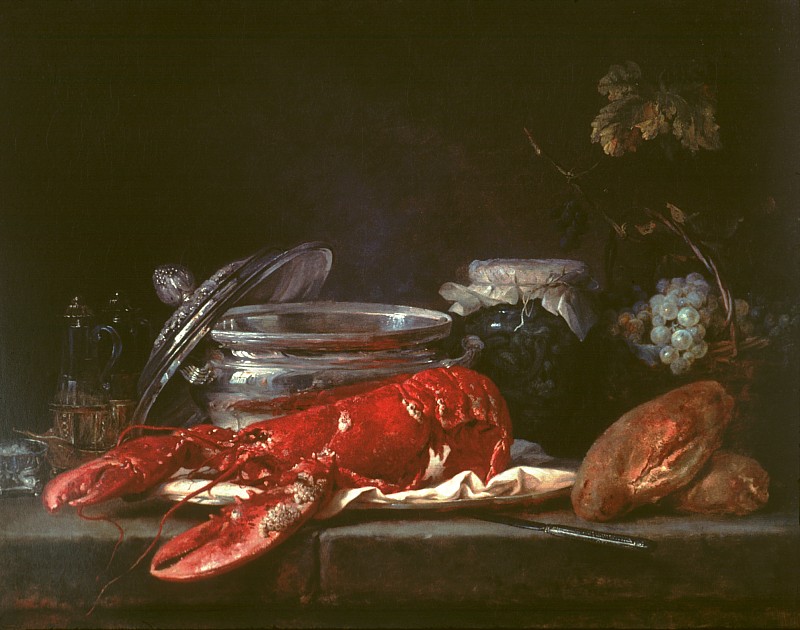
Fig.4. Vallayer-Costa, A Still Life with Lobster (1781)
At the onset of the 18th century, artists continued to create pieces in a similar way to those of the 17th century artists. The French began to change this slightly, choosing to create texture and detail within objects, but to have simple backgrounds, those these remained dark and the colours used were rather basic. The wealthy French of this era were not excited by vanitas works and so would commission artists to create the table pieces but without the sinister message being attached to them. Still life as a genre was not seen as important as other genres. However, the wealthy wanted to celebrate their wealth and not be reminded of the futility of the objects they possessed and so still life endured in this way.
19th Century

Fig. 5. Goya, F Still Life with Fruit, Bottles, Breads (c.1824-1826) 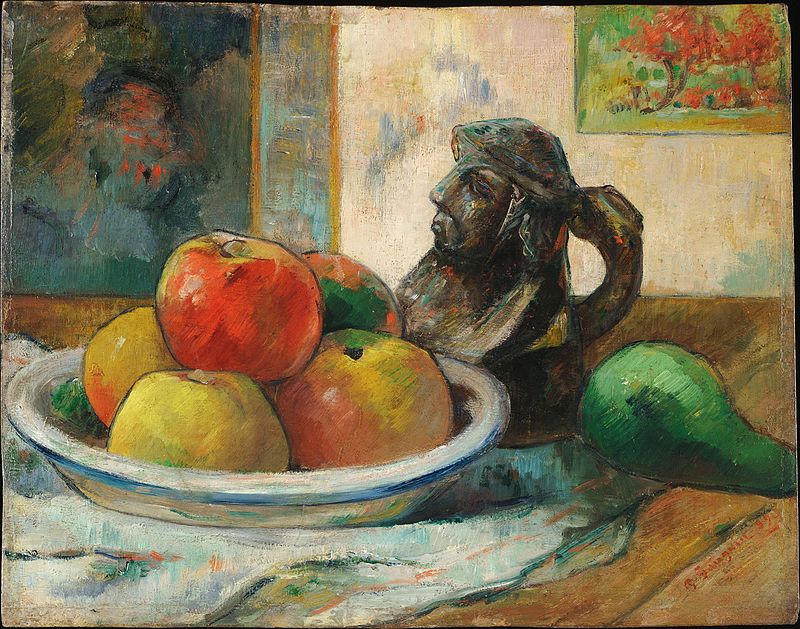
Fig. 6. Garguin, P Still Life with Apples, a Pear, and a Ceramic Portrait Jug (1889)
As can be seen in the pieces I have chosen, above, this era brought with it the removal of dark backgrounds and perfect brushstrokes. With still life still being low down in the rankings as a genre, artists began to express themselves differently within their paintings, including more emotion and colour – which was often exaggerated. They were less concerned with objects being precise, but more with breaking the norm. As a result of this, the genre actually became more popular due to its ability to be used to experiment in this way. There were also no longer hidden messages within the objects generally, but the application of the paint and colour were almost a hidden message within themselves.
20th Century

Fig. 7. O’Keefe. G Untitled (1905) 
Fig. 8. de Vlaminck, M Nature Morte Bleue (1907)
Artists in this era had pushed the boundaries of experimentation even further. Such things as recognisable objects and figures were dissected very closely to abstraction. Perspective and controlled paint application were a thing of the past, with artists choosing to consider things which would have been deemed unthinkable by their predecessors. Science began to play a big part in the lives of artists and, as a result, they began to deconstruct objects and to really experiment with geometric shapes, line, form, tone and different coloured backgrounds.
21st Century

Fig.9. Seal, I Exerthingle Percists (Edgeley Acid) (2011) 
Fig. 10. Seal, I The Beating Dodges the Question (2015) 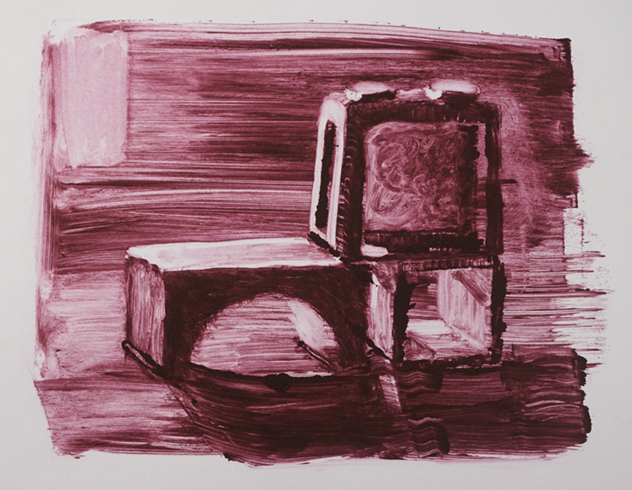
Fig. 11. Fuller, N Lion (2016) 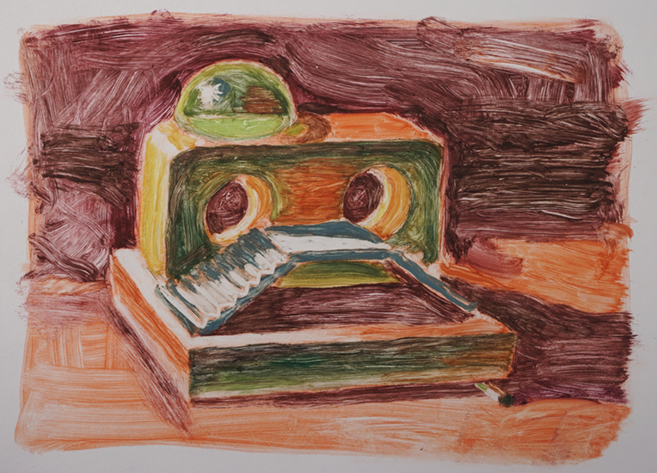
Fig. 12. Fuller, N In Disguise (2016)
By the 21st century, artists have completely thrown out the instruction manual set down for them by those in the 17th century. Still life is now at the forefront of the genre hierarchy and works have taken on a completely different level in the realm of being computer-generated. Other artists have turned to surreal settings for their still life objects, allowing them to float or appear weightless. Other artists aim for photo-realistic results within their works.
Reflection
From looking at my earlier research on this topic as well as the research just carried out, it is clear to see that artists have slowly but surely evolved to remove all barriers of realism (unless specifically desired) and there are no longer any right or wrong answers or measures one must take for a piece to be considered a masterpiece. I feel sure that should the Dutch School be faced with the pieces shown above by Fuller, they would think them ridiculous and worthless due to their ‘childish’ appearance. However, should those of the 19th century be faced with these pieces, they may actually be able to appreciate the energy, mood and emotion which has been placed before them. I think we now have a greater understanding of what each era’s artists were trying to achieve and the messages they wished to portray to their viewers, but that this knowledge and understanding allows us an extra freedom those before us did not have. Notwithstanding the fact we now live in a world where diversity is celebrated and our own individual thoughts , beliefs and opinions are to be respected and valued. Our world today allows for individuality within work. Thanks to those before me who strove to push their barriers and evolve slowly throughout the centuries, I am now able to create whatever I feel connected to and which I deem beautiful in my own way, with my own vision. That is truly extraordinary and something for which I am very grateful.
List of Illustrations
Fig.1. Dutch School (c.17th Century) ‘A Vanitas Still Life with a Skull, a Violin, a Music Book, Various other Books and Instruments on a Draped Table, before a Red Curtain’ [oil on canvas] At: https://www.christies.com/lotfinder/Lot/dutch-school-17th-century-a-vanitas-still-5949951-details.aspx (Accessed on 16 March 2020)
Fig.2. Dutch School (c. 17th Century) ‘Floral Still Life with Tulips. Iris, Roses, Hydrangeas and a Butterfly’ [oil on canvas] At: https://www.mutualart.com/Artwork/17th-century–Floral-Still-Life-with-Tul/F82797A4877B7C15 (Accessed on 4 February 2020)
Fig.3. Melendez, L (c.1771) ‘Still Life with Apples, Grapes, Melons, Bread, Jug and Bottle’ [Oil on canvas board] At: https://commons.wikimedia.org/wiki/File:Luis_Mel%C3%A9ndez_-_Still_Life_with_Apples,_Grapes,_Melons,_Bread,_Jug_and_Bottle_-_Google_Art_Project.jpg (Accessed on 16 March 2020)
Fig.4. Vallayer-Costa, A (1781) ‘Still Life with Lobster’ [Painting] At: https://commons.wikimedia.org/wiki/File:Still_Life_with_Lobster.jpg (Accessed on 17 March 2020)
Fig. 5. Goya, F (c.1824-1826) ‘Still Life with Fruit, Bottles, Breads’ [Oil on canvas] At: https://commons.wikimedia.org/wiki/File:Naturaleza_muerta_con_botellas,_frutas_y_pan_por_Goya.jpg (Accessed on 17 March 2020)
Fig. 6. Garguin, P (1889) ‘Still Life with Apples, a Pear, and a Ceramic Portrait Jug’ [Oil on canvas] At: https://commons.wikimedia.org/wiki/File:Paul_Gauguin_116.jpg (Accessed on 17 March 2020)
Fig. 7. O’Keefe. G (1905) ‘Untitled’ [Watercolour on paper] At: https://en.wikipedia.org/wiki/Georgia_O%27Keeffe#/media/File:Georgia_O’Keeffe,_Untitled,_vase_of_flowers,_1903_to_1905.tif (Accessed on 18 March 2020)
Fig. 8. de Vlaminck, M (1907) ‘Nature Morte Bleue’ [Oil on Canvas] At: https://www.christies.com/lotfinder/lot_details.aspx?from=salesummery&intobjectid=6190583&sid=e14f98bf-9bdf-402c-93ca-dc041a43cbc7&lid=2
Fig.9. Seal, I (2011) ‘Exerthingle Percists (Edgeley Acid)’ [Oil on canvas] At: https://carlfreedman.com/artists/ivan-seal/ (Accessed on 18 March 2020)
Fig. 10. Seal, I (2015) ‘The Beating Dodges the Question,’ [Oil on canvas] At: https://carlfreedman.com/artists/ivan-seal/ (Accessed on 18 March 2020)
Fig. 11. Fuller, N (2016) ‘Lion’ [Monoprint] At: https://neillfullerpaintings.com/prints (Accessed on 18 March 2020)
Fig. 12. Fuller, N (2016) ‘In Disguise’ [Monoprint] At: https://neillfullerpaintings.com/prints (Accessed on 18 March 2020)
Bibliography
BBC. (2018) ‘Secret Symbols in Still-Life Painting’ [Online] At: http://www.bbc.com/culture/story/20180318-secret-symbols-in-still-life-painting (Accessed on 21 April 2020)
Easy Oil Painting Techniques. (Unknown) ‘Still Life Symbolism, or Symbols in Still Life, What do They Mean?’ [Online] At: https://www.easy-oil-painting-techniques.org/still-life-symbolism.html (Accessed on 21 April 2020)
Madeleine’s Art Blog. (2018) ‘The Highly Systematic Methodology of Dutch 17th Century Painting Techniques’ [Online] At: https://www.google.com/amp/s/madeleinesartblog.wordpress.com/2018/05/22/the-highly-systematic-methodology-of-dutch-17th-century-painting-techniques/amp/ (Accessed on 20 April 2020)
Mearto. (2016) ‘Decoding the Hidden Meanings in Still Life Painting’ [Online] At: https://blog.mearto.com/2016/08/11/decoding-the-hidden-meanings-in-still-life-painting/ (Accessed on 21 April 2020)
Wikipedia. (2020) ‘Still Life’ [Online] At: https://en.wikipedia.org/wiki/Still_life (Accessed on 1 April 2020)
 Rachael's OCA Blog: Painting One: The Practice of Painting


2 thoughts on “Research Point 2.2.0 : Still Life and Flowers by 17th Century Dutch Artists / Still Life by 18th, 19th and 20th Century Artists”